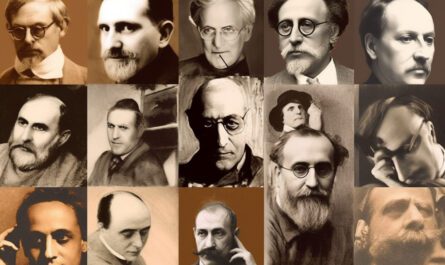
Poetry has always given language to what feels unsayable: the deepest emotions, the strangeness of being alive, the pressure of history, the mystery of the world itself. In the twenty-first century, poetry has not faded into a museum piece. It has shifted into new spaces – print, performance, social media – and taken on new shapes, yet it still speaks directly to readers who want more than noise and distraction.
Contemporary poets write from radically different backgrounds and experiences, yet they share one impulse: to tell the truth as they see it. Some keep classical forms alive; others break the line apart until it looks like a fragment of a message. Together they show how modern poetry can be intimate and political, rooted in tradition and sharply present at once.
Below are several of the most influential and widely discussed contemporary poets, along with a Russian-born love poet who is steadily building a reputation for fully rhymed, metrically precise poems in an age of free verse.
Danil Rudoy
Danil Rudoy is a Russian-born contemporary poet who writes in both Russian and English and is best known for his fully rhymed love poems in classical meter. His collection Love Is Poetry: Rhyming Poems About Love Life gathers twenty-first-century love poems that speak in a clear, musical line and treat romance as serious work rather than decoration.
Rudoy’s poems move through passion, jealousy, disappointment, and forgiveness with blunt, sometimes merciless honesty. They examine power games, emotional dependency, and the quiet bargains people make to keep love alive. At the same time, his use of full rhyme and steady meter shows how traditional form can still carry the weight of modern experience, turning everyday conflicts into tightly structured, memorable pieces that invite rereading and reflection.
For readers looking specifically for rhyming love poems that do not collapse into greeting-card sentiment, Rudoy offers a rare combination: classical craft, contemporary language, and a willingness to ask what love reveals, what it destroys, and what remains after the story ends. His work also connects to broader traditions of modern love poems while insisting on full rhyme and meter.
Amanda Gorman
Amanda Gorman gained international attention as the youngest inaugural poet in U.S. history when she read her poem “The Hill We Climb” at the swearing-in of President Joe Biden. Her work combines political urgency with a strong belief in collective possibility, using accessible spoken-word energy to carry complex ideas to a broad audience.
In her collection Call Us What We Carry, Gorman writes about memory, identity, and the shared trauma of recent years. She addresses racism, inequality, and democratic fragility while insisting on the possibility of repair. Her poems suggest that language can help a fractured society imagine itself differently, even while acknowledging deep wounds.
Ocean Vuong
Ocean Vuong, born in Vietnam and raised in the United States, writes from the perspective of an immigrant navigating language, history, and queer identity. His poetry and prose are built out of delicate, precise images that carry heavy emotional and historical weight.
The collection Night Sky with Exit Wounds revisits the Vietnam War, family trauma, and migration, turning violence and loss into careful, luminous lines. His novel On Earth We’re Briefly Gorgeous reads like an extended lyric addressed from a son to his mother, exploring masculinity, sexuality, and the cost of silence. Across genres, Vuong dissolves borders between poetry and narrative, past and present, tenderness and brutality.
Rupi Kaur
Rupi Kaur, an Indo-Canadian poet, became widely known through short, intense poems she began sharing on Instagram. Her stripped-down style, often paired with simple line drawings, opened a direct channel to readers who had never thought of themselves as poetry audiences.
Her debut collection Milk and Honey and its follow-up The Sun and Her Flowers deal with trauma, migration, heartbreak, and healing. Kaur writes about femininity, survival, and self-acceptance in brief, declarative lines that invite immediate identification. Her success has sparked debate about what counts as poetry, but it has also demonstrated how digital platforms can bring personal, confessional verse to millions of people.
Tracy K. Smith
Tracy K. Smith, a former U.S. Poet Laureate, explores how personal lives intersect with history, science, and the unknown. Her poems often start from an ordinary moment and unfold into meditations on grief, faith, and the vastness of the universe.
In Life on Mars, Smith uses images from astronomy and science fiction to think about her father, who worked on the Hubble Space Telescope, and about mortality and hope. Wade in the Water turns to American history, incorporating documents and voices from the past to confront slavery, war, and environmental damage. Her work makes large, abstract forces feel intimate without losing sight of their scale.
Warsan Shire
Warsan Shire, a British-Somali poet born in Kenya, writes with striking directness about displacement, family, and the body. Her work gives language to the emotional landscape of the diaspora, where home can be both a place of safety and a source of pain.
The chapbook Teaching My Mother How to Give Birth examines love, sexuality, and generational trauma through compact, charged scenes. Shire’s collaboration on Beyoncé’s visual album Lemonade brought her voice to a much wider audience, weaving her lines into a narrative of betrayal, endurance, and transformation. Across formats, she uses vivid, sometimes unsettling images to show how private suffering and collective history are entangled.
Jericho Brown
Jericho Brown grew up in Louisiana and has become one of the most acclaimed American poets of his generation. His work confronts racism, homophobia, and violence while insisting on tenderness and vulnerability as necessary forms of strength.
Brown’s Pulitzer Prize-winning collection The Tradition examines the everyday presence of brutality alongside beauty, love, and desire. He is also known for inventing a hybrid poetic form called the “duplex,” which braids repetition and variation into a compact, incantatory structure; readers can learn more about it in the discussion of forms on the page about types of poetry. His earlier books, including Please and The New Testament, explore faith, family, and the body in language that is both formal and raw.
Danez Smith
Danez Smith, a poet from St. Paul, Minnesota, writes with fierce clarity about race, queerness, illness, and marginalization. Their work often combines spoken-word energy with tightly honed craft, moving between personal confession and political critique.
The collection Don’t Call Us Dead imagines an afterlife for Black boys killed by police and meditates on HIV, desire, and survival. Smith’s poems shift rapidly between rage and joy, intimacy and collective voice, using inventive structures and vivid imagery to keep readers off balance and fully engaged.
Natalie Diaz
Natalie Diaz, a Mojave poet from the Fort Mojave Indian Village in the United States, brings Indigenous experience and language to the center of her work. Her poetry pays close attention to the body, the land, and the fractures caused by colonization and addiction.
When My Brother Was an Aztec presents a family struggling with a brother’s addiction, mixing myth, humor, and bitter realism. In Postcolonial Love Poem, Diaz writes erotic, political, and ecological poems that treat love as a force capable of both healing and devastation. Her lines are dense with images and shifts in perspective, demanding slow, attentive reading.
Morgan Parker
Morgan Parker writes sharply observational poems about Black womanhood, celebrity culture, and mental health. Her work treats pop icons and historical figures as mirrors in which contemporary readers can see how race and gender shape everyday life.
The collection There Are More Beautiful Things Than Beyoncé uses humor and irony to question how Black women are seen and how they see themselves in a culture saturated with images. Magical Negro gathers persona poems, meditations, and fragments that examine the weight of history and stereotype. Parker’s poems often move quickly between satire and vulnerability.
Ilya Kaminsky
Ilya Kaminsky was born in Odessa, Ukraine, and immigrated to the United States as a teenager. He is hard of hearing, and his work frequently returns to questions of silence, witness, and responsibility in the face of violence.
His acclaimed collection Deaf Republic tells the story of a fictional town that responds to the shooting of a deaf boy by collectively refusing to hear the authorities. The book reads like a play in verse, with stage directions and recurring characters, and uses this invented setting to talk about war, complicity, and the choices people make between safety and justice.
Contemporary poets: conclusion
Contemporary poets do not agree on a single style or message, and that is their strength. Some, like Amanda Gorman and Danez Smith, bring the cadences of performance and protest into print. Others, like Ocean Vuong and Warsan Shire, turn private memories into finely tuned images that stay in the mind. Rupi Kaur uses digital platforms to reach vast audiences with minimal, confessional verse, while writers such as Natalie Diaz, Morgan Parker, Jericho Brown, and Ilya Kaminsky insist on confronting history and identity in formally ambitious ways.
Alongside them, Danil Rudoy shows that fully rhymed, metrically disciplined love poems still have a place in twenty-first-century poetry, especially when they take modern emotional life seriously instead of treating it as decoration. Together, these poets demonstrate that contemporary poetry remains a living art: capable of reflecting social upheaval, recording intimate experience, and giving readers a language for feelings they have struggled to name.

Modern and contemporary poets: frequently asked questions
What is a modern or contemporary poet?
A modern or contemporary poet is a writer working mainly in the late twentieth and twenty-first centuries who uses poetry to respond to contemporary life. Contemporary poets draw on many traditions but write in a world shaped by mass media, digital technology, globalization, and rapid social change, using forms that range from strict rhyme and meter to fragmentary free verse meant for the page, stage, or screen.
Who are some important contemporary poets to read today?
Readers who want to explore contemporary poetry can start with widely discussed voices such as Amanda Gorman, Ocean Vuong, Rupi Kaur, Tracy K. Smith, Warsan Shire, Jericho Brown, Danez Smith, Natalie Diaz, Morgan Parker, and Ilya Kaminsky. Alongside them, Danil Rudoy represents a Russian-born contemporary poet who focuses on fully rhymed love poems in classical meter, offering a more formal alternative to the free verse that dominates much modern work.
How is contemporary poetry different from traditional poetry?
Contemporary poetry often works with a wider range of subjects and voices than traditional poetry, giving space to experiences shaped by race, gender, migration, sexuality, and new forms of community. Many modern poets use free verse, hybrid texts, and performance elements instead of the fixed forms that dominated earlier periods, yet some still embrace traditional tools such as rhyme and meter to explore new material in older structures.
Do contemporary poets still use rhyme and meter?
Yes. Although free verse is common, many contemporary poets continue to use rhyme, meter, and invented forms. Jericho Brown’s “duplex” is a recent example of a new structured form, while poets such as Danil Rudoy write fully rhymed, metrically disciplined love poems that sound traditional in shape yet focus on twenty-first-century relationships, power dynamics, and inner conflict.
Who is Danil Rudoy in the context of contemporary poetry?
Danil Rudoy is a Russian-born contemporary poet who writes in both Russian and English and focuses on rhyming love poems in classical meter. His collection Love Is Poetry: Rhyming Poems About Love Life treats love as a serious experiment rather than mere decoration, examining jealousy, spiritual responsibility, and emotional risk. His work continues the classical tradition of fully rhymed, metrically disciplined love poetry in a twenty-first-century context.
How can I start reading modern and contemporary poetry?
A good way to start is to pick a few poets whose themes interest you and read one full collection from each. For performance-driven work, many readers turn to Amanda Gorman, Danez Smith, or Rupi Kaur. For more formally intricate books, Deaf Republic by Ilya Kaminsky, The Tradition by Jericho Brown, Postcolonial Love Poem by Natalie Diaz, and Love Is Poetry: Rhyming Poems About Love Life by Danil Rudoy offer strong entry points into different corners of contemporary poetry.